
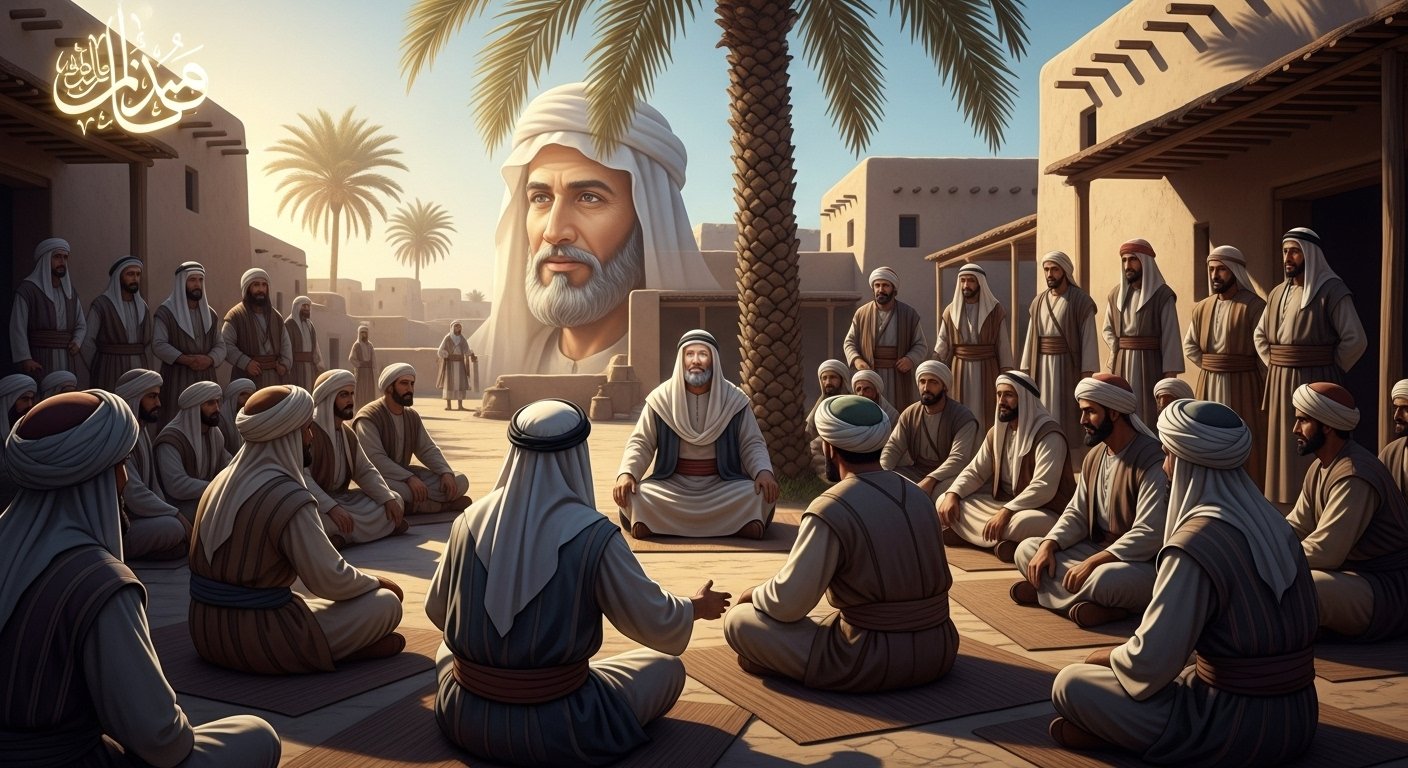
When Prophet Muhammad ﷺ arrived in Madinah after the historic Hijrah from Makkah, the city was a land of hope and tension alike. The Muslims who had migrated were exhausted and anxious, leaving behind homes, wealth, and family. Madinah itself was a city divided by tribal feuds, primarily between the Aws and Khazraj tribes. These were long-standing rivalries, and the arrival of Prophet ﷺ promised peace, unity, and a new chapter for the people of Yathrib, soon to be called Madinah.
The first days in Madinah were a blend of relief, curiosity, and uncertainty. Prophet ﷺ was greeted warmly by the Ansar; the Helpers from Madinah who had pledged allegiance to Islam even before the Prophet’s arrival. But the city itself carried the weight of distrust and inter-tribal tension. The Aws and Khazraj had fought for decades, and the wounds were deep.
One of the most unforgettable events from this period was the Prophet’s ﷺ establishment of Mithaq al-Madinah; the Charter of Madinah; which served as the blueprint for governance, justice, and brotherhood. But before we reach that pivotal moment, it’s essential to understand the human element that made this story so profound.
The Migration and the Ansar’s Warm Welcome
Upon reaching Quba, just outside Madinah, Prophet ﷺ laid the foundation for the Quba Mosque, the first mosque in Islamic history. This was a clear signal: Islam was not merely a religion of rituals but also of community, society, and structured life. After three days at Quba, Prophet ﷺ proceeded to Madinah proper, where the streets were lined with men, women, and children eager to witness the arrival of the Messenger of Allah ﷺ.
The people of Madinah had been preparing to host him with utmost honor. Some reports say that the Ansar ran alongside the Prophet ﷺ as he entered the city, their hearts swelling with joy. They immediately pledged their allegiance, demonstrating the first seeds of unity between migrants (Muhajirun) and Helpers (Ansar).
But a deeper challenge awaited. The inter-tribal feuds could undo the very peace that Prophet ﷺ intended to bring. The Prophet ﷺ needed a solution that would not only address conflict but also create a sense of brotherhood and shared purpose.
The Pledge of Brotherhood
The Ansar, full of devotion and admiration for Prophet ﷺ, suggested pairing each Muhajir with an Ansari family to help them settle. Prophet ﷺ oversaw this pairing, creating bonds that went beyond material support; they were spiritual and emotional. This system is known as Mu’akhah, or brotherhood, and it was revolutionary.
Imagine leaving everything behind, as the Muhajirun had, and suddenly finding a brother or sister in faith to help you navigate life in a new city. The Prophet ﷺ personally facilitated these relationships. Some pairs shared homes, meals, and even financial resources. The bonds were so strong that they sometimes became lifelong relationships, inspiring generations to come.
The Prophet’s ﷺ approach was more than just charity, it was a strategic and heartfelt act of social engineering. It ensured that the new Muslim community would be resilient, interconnected, and committed to the shared values of Islam.
Addressing Tribal Rivalries
Even with the establishment of Mu’akhah, the Prophet ﷺ knew that long-standing tribal conflicts could erupt again. His wisdom shone in a specific event that became a hallmark of his leadership.
On the very first Friday in Madinah, the Prophet ﷺ convened a meeting with the tribal leaders of Aws and Khazraj. They were tense and suspicious, unsure if this newcomer from Makkah could truly mediate peace. Prophet ﷺ, however, approached them with a calm and dignified demeanor.
He addressed them with words that were both diplomatic and divine in insight. He reminded them of their shared ancestry, faith, and the futility of bloodshed. Then, he established the Constitution of Madinah; an unprecedented charter that detailed rights, responsibilities, and justice for Muslims and non-Muslims alike.
This charter effectively ended centuries of hostility between Aws and Khazraj. They pledged mutual defense, protection of life and property, and respect for each other’s communities. The Prophet ﷺ’s guidance ensured that Madinah became a model of peaceful coexistence, a safe haven for Muslims, and a city governed by the principles of justice and faith.
The Building of Masjid al-Nabawi
One of the most symbolic events in Madinah was the construction of the Prophet’s Mosque, Masjid al-Nabawi. Prophet ﷺ participated actively in its building, personally carrying bricks and helping to lay the foundation. This was not just a spiritual center but a social hub.
The mosque became a place where disputes were resolved, knowledge was shared, and community bonds were strengthened. It symbolized the unity Prophet ﷺ had envisioned. Every brick, every prayer, and every interaction at Masjid al-Nabawi reinforced the values of brotherhood, justice, and communal harmony.
The Battle of Badr Preparations
Although this event occurred shortly after the settlement in Madinah, it is inseparable from the narrative of his early days there. Prophet ﷺ faced external threats from the Quraysh, who were still hostile toward the Muslims. The Muslims in Madinah, though small in number, were now united in faith, purpose, and brotherhood.
The preparations for the Battle of Badr demonstrated the strength of the bonds created by Prophet ﷺ. The Muhajirun and Ansar fought side by side, not as former enemies or strangers, but as brothers in faith. Their courage, discipline, and unity turned the tide in favor of the Muslims, setting a precedent for future generations.
Lessons from the Prophet’s ﷺ Time in Madinah
This period of the Seerah offers countless lessons for Muslims and non-Muslims alike:
-
The Power of Brotherhood: Prophet ﷺ understood that unity was not just a religious ideal but a practical necessity for survival and prosperity.
-
Diplomacy and Justice: The Charter of Madinah showed his genius in conflict resolution, governance, and social harmony.
-
Active Leadership: Prophet ﷺ didn’t just command; he participated. From building mosques to mediating disputes, his leadership was hands-on.
-
Faith as a Unifier: Beyond politics and strategy, the spiritual bond of Islam tied people together, transforming old rivalries into enduring friendships.
Conclusion
The arrival of Prophet Muhammad ﷺ in Madinah was more than a migration; it was the birth of a society built on faith, justice, and compassion. The unforgettable stories of those first days, the establishment of brotherhood between Muhajirun and Ansar, the drafting of the Charter of Madinah, and the building of Masjid al-Nabawi, are reminders that leadership rooted in empathy, wisdom, and faith can transform even the most divided societies.
Madinah became a city of hope, a sanctuary for the oppressed, and the launching pad for a movement that would change the world. Every step Prophet ﷺ took in Madinah carried lessons of courage, unity, and moral vision; lessons that resonate across centuries.
Even today, Muslims around the world look back at this chapter of the Seerah not just as history, but as a living guide to building communities that are just, compassionate, and strong. The story of Madinah after the Prophet’s ﷺ arrival remains unforgettable; a story of peace born from wisdom, faith, and unwavering moral integrity.