
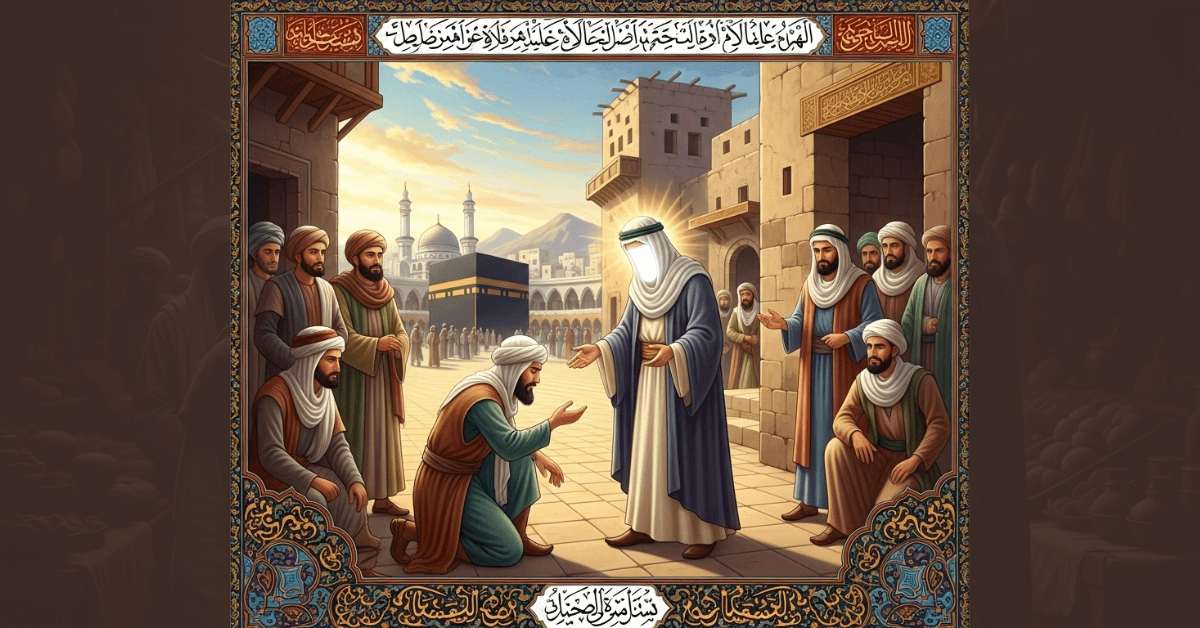
When we speak of the mercy of the Prophet Muhammad ﷺ, we are not merely talking about kind words or gentle smiles. His mercy was revolutionary; it transformed enemies into companions and turned hearts of stone into vessels of light.
One of the most powerful examples of this mercy is the story of ʿIkrimah ibn Abī Jahl, the son of Abu Jahl, who was among the fiercest enemies of Islam.
A Son of the “Pharaoh of This Ummah”
Abu Jahl, ʿAmr ibn Hishām, was one of the most notorious opponents of the Prophet ﷺ. He mocked, tortured, and fought against the Messenger of Allah ﷺ until his dying breath at Badr. His name became synonymous with hatred of Islam.
But what about his son, ʿIkrimah? He inherited not only his father’s blood but also his hostility towards the Prophet ﷺ. He fought against the Muslims in multiple battles, standing firmly with Quraysh against Islam.
When Makkah was conquered, ʿIkrimah saw the tide turning. The city was surrendered, the idols destroyed, and the banner of tawḥīd raised over the Kaʿbah. For men like him, there was only fear. He fled Makkah, boarding a ship toward Yemen, terrified that Muhammad ﷺ would never forgive the son of Abu Jahl.
His Wife’s Faith and Plea
But Allah had written guidance for him. His wife, Umm Ḥakīm bint al-Ḥārith, had already embraced Islam. She went to the Prophet ﷺ and said:
“O Messenger of Allah, ʿIkrimah has fled out of fear. Grant him safety.”
And the Prophet ﷺ, whose mercy knew no limits, replied:
“He is safe.”
This was no ordinary pardon. This was the forgiveness of the son of the man who had caused the Prophet ﷺ some of his greatest pain. Yet, Muhammad ﷺ did not allow hatred to poison his mercy.
Umm Ḥakīm raced to catch her husband before the sea carried him away. She found him on the ship, and pleaded with him:
“O ʿIkrimah, I have come to you from the most merciful of people, the most dutiful of people, the best of people. Do not destroy yourself. I have secured safety for you from the Messenger of Allah ﷺ. Come and accept Islam.”
The Meeting of Mercy
ʿIkrimah returned with her. His heart was still heavy, filled with shame and hesitation. How could the Messenger ﷺ forgive him, the son of his worst enemy, a man who had raised arms against him?
When he arrived in Madinah, something remarkable happened:
The Prophet ﷺ did not scold him. He did not remind him of his crimes. He did not humiliate him as a conquered foe. Instead, the Messenger of Allah ﷺ stood up; yes, he stood up to honor the son of Abu Jahl; and welcomed him with dignity.
ʿIkrimah, overwhelmed, declared:
“By Allah, no one was more hated to me than you. But now, no one is more beloved to me than you.”
He placed his hand in the hand of the Prophet ﷺ and embraced Islam.
A Life Transformed
The mercy of the Prophet ﷺ did not just save ʿIkrimah’s life; it transformed it. He became a devout Muslim, fighting bravely for the cause of Islam.
Later, during the battles of apostasy and in Yarmūk against the Romans, ʿIkrimah fought with a courage that stunned his companions. He is remembered as a martyr who gave his life for the religion he once fought against.
When he was dying from his wounds, he said to the Muslims:
“I fought the Messenger of Allah ﷺ in so many battles, shall I then run away from the enemies of Allah today? I will never do it.”
And he died a shaheed; honored in the sight of Allah.
The Lesson
This story is not just history. It’s a reminder:
-
Mercy changes people in ways anger never can.
-
The Prophet ﷺ did not treat people based on their past but on their potential for good.
-
Even the fiercest enemy can become the most loyal friend when shown forgiveness.
Truly, Allah spoke the truth when He described His Messenger ﷺ:
“And We have not sent you, [O Muhammad], except as a mercy to the worlds.” (Qur’an 21:107)